

 Dr. Anca Șincan
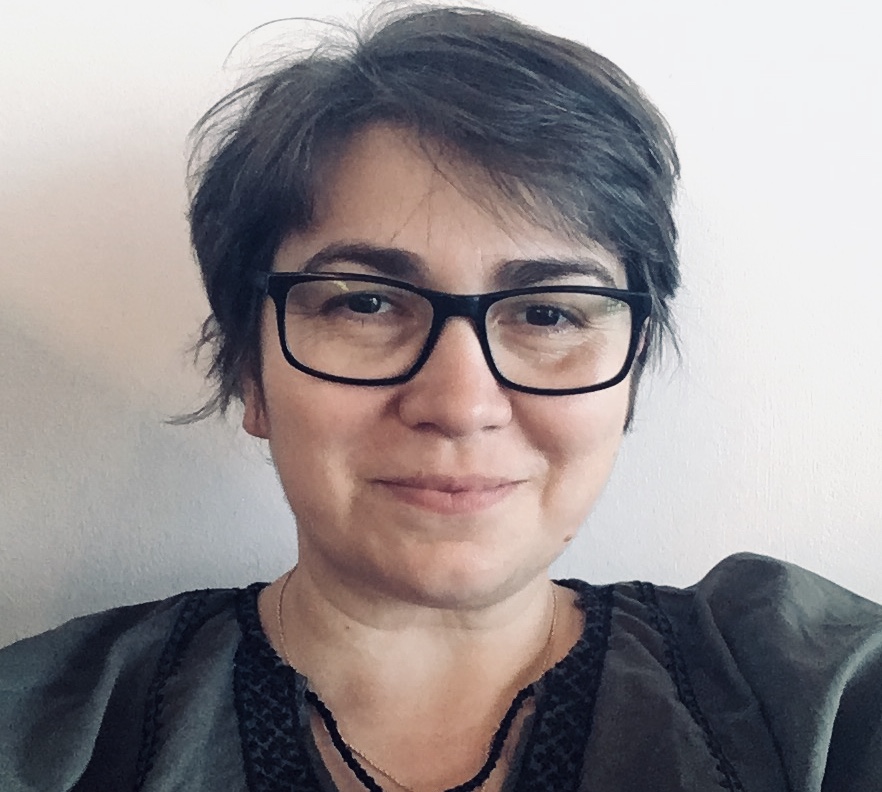 Dr. Anca Șincan
 Dr. Anca Șincan is Senior Researcher and Associate Professor at the “Ioan Petru Culianu” Institute for Religious Studies at George E. Palade University in Târgu Mureș. A historian and specialist in religious studies, she conducts archival and ethnographic research on minority religious communities in Romania. She was an expert for the Presidential Commission for the Study of the Communist Dictatorship in Romania. From 2017 to 2022, she was a researcher in the European project Hidden Gallerieson underground religious communities in twentieth-century Romania. Currently, she is a researcher for the European Research Council Project (European Research Council) Negotiating Sovereigntyfocusing on the relationship between state and Catholic Church in East Central Europe at the Research Center for Humanities in Budapest.
Recent publications include: Co-edited with Ioana Toma the journal issue Methodology of Working in Cold War Archives, în East Central Europe, 52:2/3, 2025;
Anca Șincan, Of Middlemen and intermediaries. State and Church in Communist Romania, Cluj-Napoca, Presa Universitara Clujeană, 2025;
Co-edited with James Kapalo Religia clandestină în documentele poliției secrete. O istorie în imagini,Bucharest: Humanitas, 2024;
Co-edited with Ionut Biliuțǎ the journal issue Orthodoxy and Heterodoxy: The Religious Underground in the Twentieth Century East-Central Europe in Review of Ecumenical Studies, 14:2 (2022)
 Dr. Ionuț Biluță
 Dr. Ionuț Biluță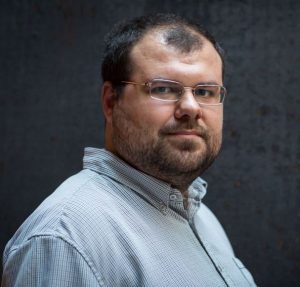
Ionuț Biliuță is a Senior Researcher (CS II) and Associate Professor at the “Ioan Petru Culianu” Institute for Religious Studies within the “George Emil Palade” University of Târgu Mureș. A historian of religious fascism and a Romanian scholar in Religious Studies, he has been involved in numerous national and international research projects. He pursued doctoral studies in History at the Central European University in Budapest (2007–2013), followed by a PhD in Church History at Babeș-Bolyai University in Cluj-Napoca (2010–2017). His research interests focus on the relationship between interwar and contemporary far-right movements and religion in the nineteenth and twentieth centuries, the Holocaust and the Christian Churches, clandestine religious practices, and the hybridization of traditional religion under the impact of totalitarianism and secularization. Among his most important publications are:
Ionuț Biliuță, The Archangel’s Priests: Investigating the Relationship between the Orthodox Church and the Iron Guard in Interwar Romania (1930-1941), Presa Universitară Clujeană, Cluj-Napoca, 2025.
Ionuț Biliuță (ed.), In God We Trust: Romanian American Religious Interferences in the Twentieth Century, Presa Universitară Clujeană, Cluj-Napoca, 2025.
Ionuț Biliuță, “A Schism in the Making? Orthodox Diplomacy, Jurisdictional Conflict, and Geopolitical Negotiations Between Romanian and Russian Orthodoxy in the Post-Communist Era,” in Fault Lines in the Orthodox World: Geopolitics, Theology, and Diplomacy in Light of the War in Ukraine, eds. Sebastian Rimestad, Emil Hilton Saggau (Cham: Palgrave, 2026), 285-306.
“Constructing Fascist Hagiographies: The Genealogy of the Prison Saints Movement in Contemporary Romania,” Contemporary European History 31:3 (August 2022): 435-455, DOI:
10.1017/S0960777321000424
 Iuliana Nagy (Cindrea)
 Iuliana Nagy (Cindrea)
Iuliana Nagy (Cindrea) holds an MA from The Department of History, Patrimony and Protestant Theology within “Lucian Blaga” University, Sibiu, Romania, and has a PhD entitled Hidden Galleries, Silenced Communities: Religious Communities and the Secret Police in 20th Century Romania from University College Cork, Ireland. Her main research interests include the history of religious minorities in Romania, such as Old Calendarist, Tudorist, and Evangelical communities, how they were perceived by the totalitarian regimes and their secret police in twentieth-century Romania, as well as the repressive mechanisms used towards these communities.
She was a member of the ERC Project Creative Agency and Religious Minorities: Hidden Galleries in the Secret Police Archives in Central and Eastern Europe (Hidden Galleries) (2016-2020) and the project „An Etnography of the “dual state”: the state of siege and the ascent of authoritarianism in Romania (1933-1944)” (2022-2024). She is currently a fellow at NEC (New Europe College), within the Ștefan Odobleja program.
 Dr. Florin George Călian
 Dr. Florin George Călian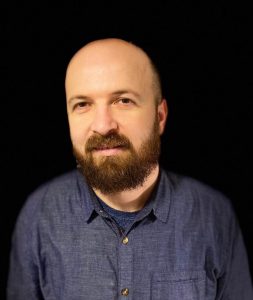
Dr. Florin George Călian is an associate lecturer at the “Ioan Petru Culianu” Institute for Religious Studies within the “George Emil Palade” University of Târgu Mureș. A researcher in the fields of the history of philosophy and religious studies, he holds a PhD in Philosophy from the Central European University (CEU) in Budapest. He completed an MA in Greco-Roman history and Archaeology at the University of Bucharest, as well as an MA in Medieval Studies, with a specialization in religious studies, at Central European University. He has undertaken research fellowships at Trinity College Dublin, New Europe College (Bucharest), Trinity College Oxford, and the Department of Philosophy in Freiburg, among others. His research interests focus on the history of philosophy, particularly its relationship with the history of religions.
He has delivered conference papers and published scholarly articles and reviews in the fields of Platonic and Neoplatonic philosophy, classical philology, religious studies, the relationship between theology and philosophy, and the problem of evil. He is a consulting editor at Ratio et Revelatio Publishing House and coordinator of its philosophy series. He is also a member of the editorial team of Review of Ecumenical Studies (Sibiu – Joensuu).
Dumitru Lisnic is a Junior Researcher and Assistant Professor at the “Ioan Petru Culianu” Institute for Religious Studies at George E. Palade University in Târgu Mureș. Over the years, he has participated in several research projects, the most important being the ERC project “Creative Agency and Religious Minorities: ‘Hidden Galleries’ in the Secret Police Archives in Central and Eastern Europe” (ERC Starter Grant 677355) at the University College Cork (Ireland), principal investigator: Professor James Alexander Kapaló. He holds a PhD in the Study of Religions from University College Cork, Ireland and another PhD in History from the University of Iași, Romania. His research interests include Soviet history, church–state relations in Eastern Europe, and ethno-religious minorities in Eastern Europe. Representative publications:
Elitele Moldovei Sovietice. Recrutare, Rețele Informale, Identități Sociale și Etnice în Bălți, 1940-41; 1944-50, Editura ARC, Chișinău, 2019, 284 pp.
“Bolshevism on religious ground’: Religious dissenters, state security, and border-making in Romanian Bessarabia, 1918-1928,” Archiva Moldaviae 15, (2025): 119-150.
“Organizing Religious Resistance: Contingent Procedures, Material Religion and early Soviet Repression against Religion, Review of Ecumenical Studies 14, no 2: Special Issue: ‘Between Orthodoxy and Heterodoxy: The Religious Underground in the Twentieth Century East-Central Europe,’ (September 2022): 197-217.
“Shifting images of a harmful sect: Operations against Inochentism in Soviet Ukraine, 1920 23,” in The Secret Police and the Religious Underground in Communist and Post-communist Eastern Europe, James Kapaló and Kinga Povedák, (eds.), Routledge, London, 2021, pp. 39-59.